-
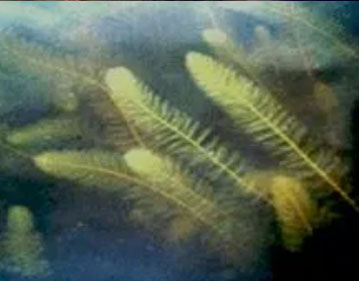
Treatment of Variable Milfoil
Management methods currently include mechanical removal, benthic barriers, herbicides and lake drawdowns. At this time, there are no know biological controls for milfoil.
-




-
-
Harvesting
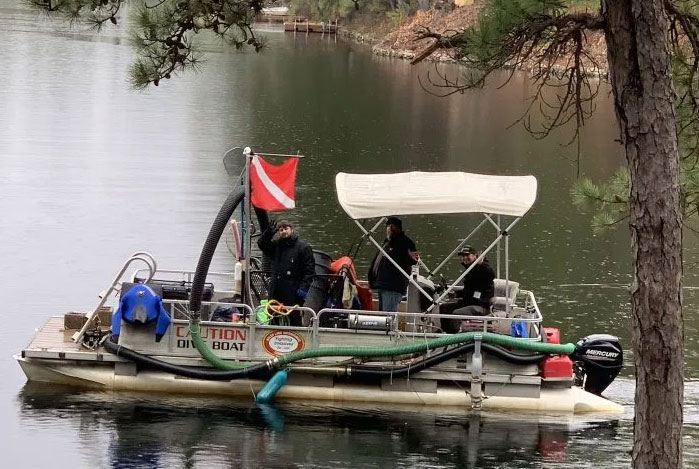
The first diver harvesting began in 2001. The DASH (Diver Assisted Suction Harvest) boat was introduced in 2011 with professional divers hired in 2012. In 2024 we began our partnership with Aqualogic Dive and Guide Company.
Currently the approach has mainly been the manual diver harvesting method. The divers harvest mid-May through June and then again for a few weeks after Labor Day. Although harvesting can greatly reduce the Variable Milfoil biomass in a water body, harvesting also causes fragmentation, and fragments are capable of producing new plants. Some fragments may drift down stream or attach to boats and wildlife and create new infestations elsewhere.
-
Herbicide Treatments
Herbicide treatments of New Hampshire waters have occurred annually since 2002. The New Hampshire Department of Environmental Services authorizes the use for specific areas with an independent company, SOLitude Lake Management doing the actual application.
In 2019 we successfully began using ProcellaCOR. ProcellaCOR was developed to specifically target variable leaf milfoil while minimizing the effect on other native plant species. -